Layers of the Landscape: Designing Gardens Through the Lens of History

Garden design rarely begins with a true blank canvas. Even the most bare of spaces still reflects layers of history and character. As a garden designer, when I look at a new project, identifying these layers is always high on my list. This is not necessarily with the intention of restoring them, but because understanding what came before often reveals the character of a place and provides inspiration for the design moving forward.
Gardens often have stories to tell, though those stories are not always immediately visible. As both a garden historian and a garden designer, there is nothing I enjoy more than delving into horticultural archives, studying old maps, estate records, photographs, and planting plans to uncover the narrative of a landscape. Even the smallest clues, a surviving tree, the line of an old path, or the remnants of a boundary wall, can hint at how a garden once functioned and how it was experienced.
Gardens are often thought of primarily as aesthetic spaces, but they are also historical documents. The layout of a garden can reveal as much about a particular period as architecture, art, or literature. Design choices reflect cultural values, social structures, and changing ideas about our relationship with the natural world.
Formal avenues and clipped hedges recall the influence of seventeenth-century European ideals of power, order, and control over nature. In contrast, sweeping lawns and carefully framed views speak of the eighteenth-century landscape movement, when designers sought to create landscapes that appeared more natural and picturesque. Even a modest cottage garden tells a story about domestic life, practicality, and the blending of beauty with food production.
When studying historic gardens, the challenge lies in reading these clues. Plants themselves can become historical evidence; the presence of certain species may reflect periods of botanical exploration, changing horticultural fashions, or historic trade routes that brought new plants into cultivation.
Yet unlike buildings, gardens never remain fixed. Plants grow, die, and are replaced. Paths shift, walls crumble, and tastes evolve. Every garden is constantly rewriting its own history.
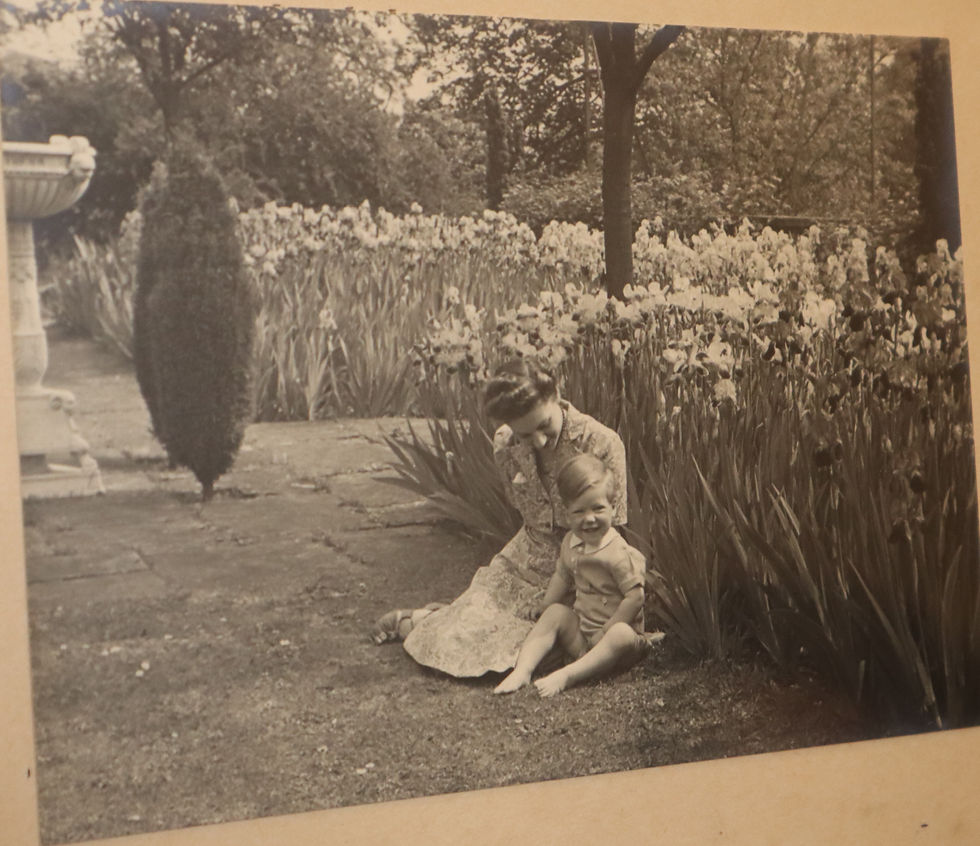
Last year, I had the privilege of seeing this relationship between past and present come to life when my reimagined design for the historic Iris Garden at Nunnington Hall was realised and opened to the public. Inspired by the carefully preserved archives held by the National Trust, the design sought to acknowledge the garden’s history while allowing it to function as a contemporary public space.
What was most rewarding was seeing how the garden began to be used. Visitors found quiet corners for reflection, while children explored the space with curiosity and freedom. At the same time, the planting welcomed wildlife and supported biodiversity, allowing the garden to feel vibrant and alive once more.
Moments like this capture what I find most compelling about working between garden design and garden history. A new design does not erase what came before; instead, it becomes another chapter in the evolving story of a place. By understanding the past, it becomes possible to create gardens that feel rooted in their surroundings while responding to the needs and rhythms of the present.
In this way, garden design and garden history are closely intertwined. One looks forward, imagining how a landscape will grow and develop, while the other looks back, uncovering the influences that shaped it. Together they help create gardens that are not only beautiful, but meaningful - landscapes that carry their history gracefully into the future.
Nunnington Hall is open to the public all year round but we recommend that you check the opening times via the National Trust Website. Huge thank you to Nick Fraser (Senior Gardener for the National Trust) and Caroline Bosher (Project Manager) who worked tirelessly on the project with me.